

Slash Your Bills: Why Every Homeowner Needs a Power Consumption Meter plug
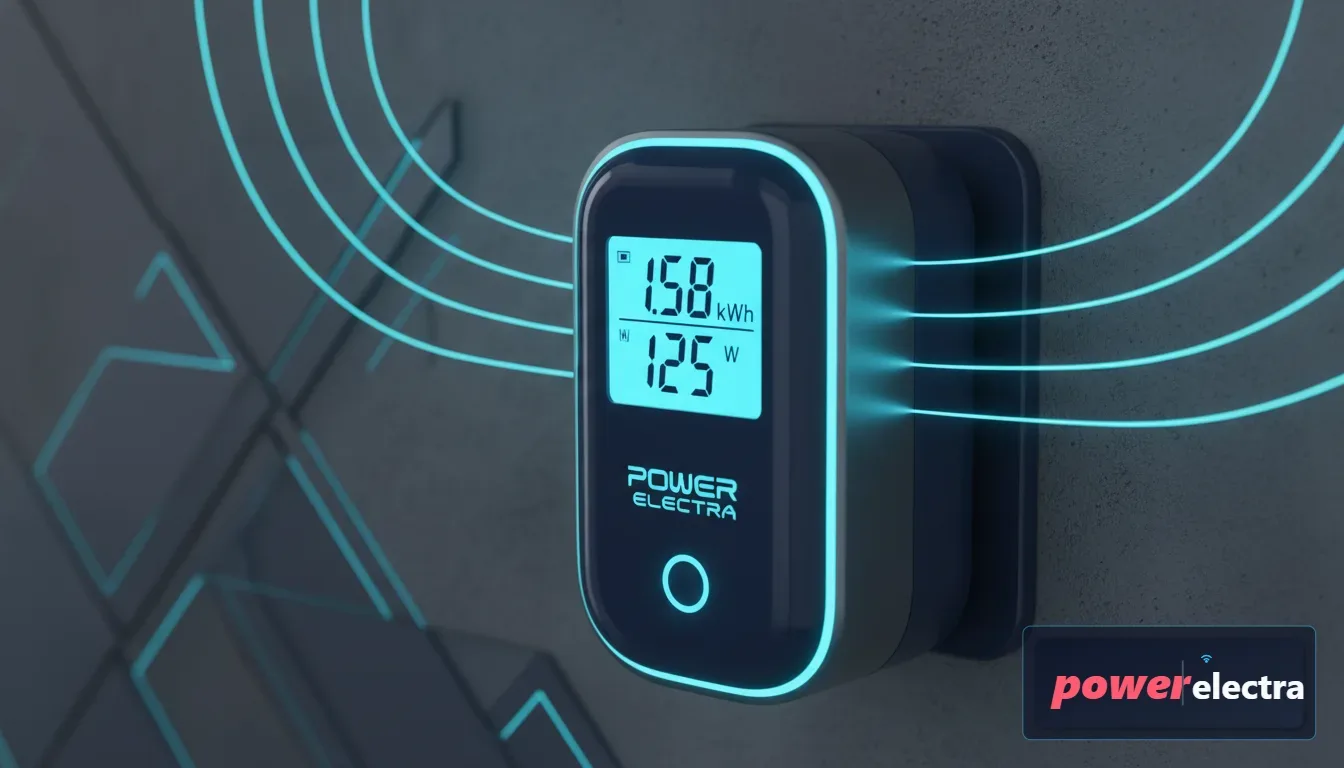
Have you ever stared at your monthly utility bill with a sense of quiet dread, wondering exactly how your electricity costs reached such astronomical heights? You are not alone. For many homeowners, the internal workings of their home’s energy usage remain a frustrating mystery. However, what if you could unmask the ‘energy vampires’ hiding in your living room? Enter the Power Consumption Meter plug—a compact, ingenious device that acts as a private investigator for your electrical sockets. By providing real-time data on exactly how much energy your appliances are drawing, this tool empowers you to make informed decisions that can lead to transformative savings on your monthly expenses.
- Real-Time Monitoring: Instantly see the wattage and cost of any plugged-in device.
- Identify Energy Vampires: Discover which appliances consume power even when they are turned ‘off’.
- Accurate Budgeting: Predict your monthly bill with precision by understanding your daily usage habits.
- Carbon Footprint Reduction: Lowering your consumption is the fastest way to live a more sustainable lifestyle.
Why a Power Consumption Meter plug is the Ultimate Money-Saving Tool
In an era of rising energy costs, passive observation is no longer an option. A Power Consumption Meter plug is pivotal because it bridges the gap between raw data and actionable insights. Most of us assume that the refrigerator is the primary culprit behind high bills, but often, it is the cumulative effect of smaller, older electronics that drains our bank accounts. By simply inserting this meter between your wall outlet and the appliance, you gain an authoritative look at volts, amps, and—most importantly—kilowatt-hours (kWh).
Read More: Which is Acceptable When Using Power Tools: Safety Tips Explained
![[A high-end, close-up shot of a sleek digital Power Consumption Meter plug connected to a wall outlet, showing a bright LCD display with energy statistics in a modern, well-lit kitchen.]](https://powerelectra.com/wp-content/uploads/2026/05/ai-image-placeholder-1-1778485719029.webp)
Furthermore, these devices offer a level of transparency that standard utility meters cannot provide. While your main meter tells you the total consumption of the entire house, the Power Consumption Meter plug allows for granular analysis. You can test the old space heater in the basement versus the new energy-efficient model in the bedroom to see if the upgrade is actually paying for itself. This level of detail is exceptional for anyone serious about home maintenance and financial efficiency.
Identifying ‘Energy Vampires’ with Your Power Consumption Meter plug
The term ‘phantom load’ refers to the electricity consumed by electronic devices while they are switched off or in standby mode. This hidden consumption can account for up to 10% of a typical household’s energy use. Using a Power Consumption Meter plug, you can finally identify these culprits. Is your gaming console drawing 15 watts even when you aren’t playing? Is that vintage lamp leaking electricity? The numbers don’t lie, and once you see the data, you can take immediate action by using power strips or smart timers.
Common Home Appliance Energy Profiles
To give you a better perspective on what to expect, consider the typical energy usage of common household items. While these are averages, your specific devices may vary significantly based on their age and efficiency rating.
| Appliance Type | Average Wattage | Standby Power (Watts) | Estimated Monthly Cost |
|---|---|---|---|
| Modern LED TV | 60W – 150W | 0.5W – 2W | $1.50 – $4.00 |
| Desktop Gaming PC | 200W – 500W | 5W – 10W | $5.00 – $15.00 |
| Space Heater | 1500W | 0W | $25.00 – $50.00 |
| Coffee Maker | 800W – 1200W | 1W – 3W | $2.00 – $4.00 |
| Old Refrigerator | 200W – 400W | N/A | $15.00 – $30.00 |
![[A descriptive infographic or image showing a homeowner pointing at a Power Consumption Meter plug, with a smile of realization, while comparing it to a physical electricity bill on a wooden table.]](https://powerelectra.com/wp-content/uploads/2026/05/ELECTRICITY-BILL.webp)
How to Choose the Right Power Consumption Meter plug
When shopping for a Power Consumption Meter plug, you will find a variety of models ranging from basic readouts to Wi-Fi-enabled smart plugs. If you prefer simplicity, a basic model with a large, backlit LCD screen is ideal. These units typically show cumulative kWh, current wattage, and peak usage. For those who enjoy home automation, smart plugs with integrated metering allow you to track data via a smartphone app and even set schedules to turn devices off automatically when they aren’t needed.
In light of this, consider the maximum amperage the plug can handle. Most standard household plugs are rated for 15 amps, which is sufficient for almost all appliances. However, if you plan to monitor a heavy-duty air conditioner or a large power tool, ensure the Power Consumption Meter plug is rated for the load to prevent overheating or fire hazards. Safety and accuracy should always be your top priorities.
Step-by-Step: Maximizing Your Energy Audit
- The Baseline Test: Plug the meter into an outlet and connect a device you use daily, such as a toaster or a hair dryer, to understand its peak draw.
- The 24-Hour Trial: For appliances like refrigerators or wine coolers that cycle on and off, leave the meter attached for at least 24 hours to get an accurate average of daily kWh.
- The Standby Check: Turn the appliance ‘off’ while it remains plugged into the meter. If the wattage doesn’t drop to zero, you’ve found an energy vampire.
- Calculate the Savings: Most meters allow you to input your local utility rate (e.g., $0.15 per kWh). Use this feature to see the actual dollar amount your device costs you per year.
![[A photorealistic image of a living room at night with various electronics plugged into a power strip, with one prominent Power Consumption Meter plug glowing softly, highlighting the contrast between active and standby power.]](https://powerelectra.com/wp-content/uploads/2026/05/SMART-PLUG.webp)
Frequently Asked Questions
How accurate are Power Consumption Meter plugs?
Most consumer-grade meters are remarkably accurate, typically within a 1% to 2% margin of error. This is more than sufficient for household energy auditing and identifying significant areas of waste.
Can I use a Power Consumption Meter plug outdoors?
Unless specifically labeled as ‘weatherproof’ or ‘outdoor rated,’ you should only use these devices indoors. Standard models are not designed to withstand moisture, extreme temperature fluctuations, or direct sunlight.
Will using the meter itself increase my bill?
The energy consumed by the Power Consumption Meter plug itself is negligible—usually less than 0.5 watts. The savings you generate by identifying inefficient appliances will far outweigh the tiny amount of power used to run the meter.
Can these plugs help prevent electrical fires?
While their primary purpose is energy monitoring, they can act as an early warning system. If an appliance is drawing significantly more current than its rating suggests, it may indicate a failing motor or a short circuit, allowing you to repair or replace it before it becomes a safety hazard.
Read More: How to Store Power Tools: Expert Tips for Safe, Organized Storage
Conclusion: Taking Command of Your Home’s Energy
Ultimately, the journey to a more efficient home begins with knowledge. You cannot manage what you do not measure. By integrating a Power Consumption Meter plug into your household routine, you transition from a passive consumer to an active manager of your resources. Whether you are looking to shave twenty dollars off your monthly bill or striving to lead a more eco-conscious lifestyle, this small investment yields massive dividends. Don’t let your hard-earned money vanish into the ether of inefficient electronics—get a Power Consumption Meter plug today and start seeing your home in a whole new light.

Leave a Reply