

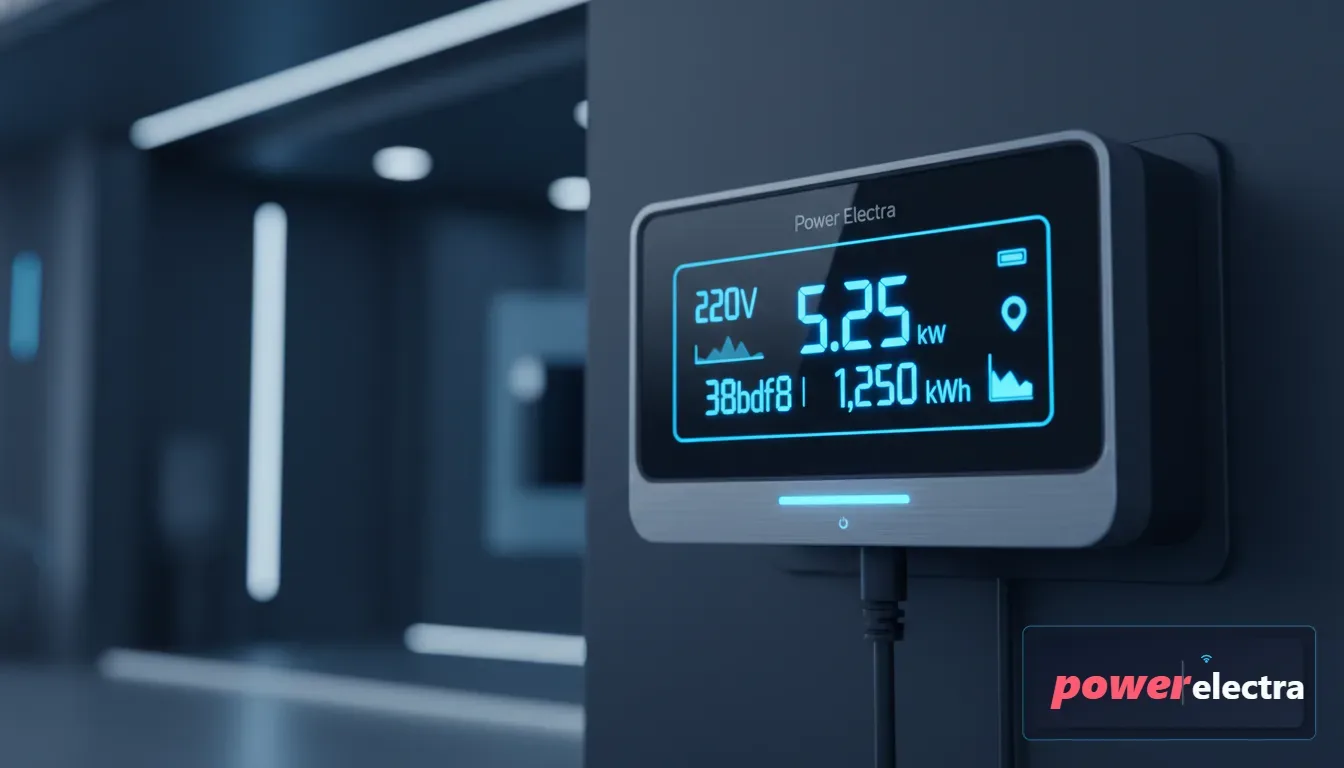
Master Your Energy Bills: Why You Need an Electricity Usage Monitor 220v Today
Have you ever opened your monthly utility statement only to feel a cold shiver of disbelief? We have all been there—staring at a number that seems impossibly high, wondering which appliance is the secret culprit draining your bank account. In an era where energy costs are skyrocketing and environmental consciousness is no longer optional, taking control of your home’s power consumption is transformative. For homeowners operating on higher voltage systems, an Electricity Usage Monitor 220v is not just a gadget; it is a pivotal tool for financial freedom and efficiency.
While many standard monitors cater to 110v outlets, those of us with heavy-duty appliances or living in regions with 220v standards require something more robust. Whether it is your air conditioning unit, electric water heater, or high-end kitchen appliances, these devices are the heavy hitters of your energy bill. By utilizing an Electricity Usage Monitor 220v, you gain meticulous insight into exactly where every cent of your utility budget is going.
Read More: How to Reduce Electricity Consumption at Home: The Ultimate Guide to Slashing Your Bills
Key Takeaways & Summary:
- Identify Energy Vampires: Pinpoint exactly which appliances consume the most power even when on standby.
- Real-Time Data: Receive immediate feedback on voltage, wattage, and cost-per-hour metrics.
- Universal Compatibility: Designed specifically for high-voltage 220v systems common in Europe, Asia, and for heavy US appliances.
- Financial Control: Reduce monthly energy expenditures by up to 20% through informed behavioral changes.
- Proactive Maintenance: Detect failing appliances early by monitoring unusual spikes in energy draw.
![[A high-quality, photorealistic close-up of a modern digital Electricity Usage Monitor 220v plugged into a sleek wall outlet, displaying a bright blue backlit LCD screen with clear wattage and voltage readings in a contemporary home setting.]](https://powerelectra.com/wp-content/uploads/2026/05/ai-image-placeholder-1-1778485335850.webp)
Understanding the Power of an Electricity Usage Monitor 220v
The core function of an Electricity Usage Monitor 220v is to bridge the gap between mystery and clarity. Most homeowners view electricity as an invisible, abstract cost. However, when you see the numbers ticking up in real-time, that abstraction disappears. These devices measure the current flowing through the circuit and translate it into readable data, such as Kilowatt-hours (kWh).
Why is the 220v specification so critical? In many parts of the world, 220-240v is the standard residential voltage. In North America, while 110v is standard for wall outlets, the most energy-intensive appliances—like clothes dryers, EV chargers, and well pumps—run on 220v. If you are only monitoring your 110v outlets, you are missing the biggest piece of the puzzle. Using a dedicated Electricity Usage Monitor 220v ensures you are capturing the data that actually moves the needle on your expenses.
The Pivotal Benefits of Real-Time Monitoring
Integrating a monitor into your home ecosystem offers more than just numbers on a screen; it provides a roadmap for efficiency. Firstly, it exposes “phantom loads”—the electricity drawn by devices that are turned off but still plugged in. You might be shocked to learn that your 220v oven or specialized workshop tools are sipping power even when idle.
Furthermore, these monitors serve as an early warning system for appliance failure. If your refrigerator compressor starts drawing 30% more power than it did last month, it is a clear sign of mechanical fatigue. By catching these issues early with an Electricity Usage Monitor 220v, you can avoid catastrophic failures and expensive emergency repairs. It is about being proactive rather than reactive.
![[A lifestyle image showing a concerned homeowner pointing at a tablet screen that displays a colorful bar chart of weekly energy consumption, with a 220v monitor visible in the background background.]](https://powerelectra.com/wp-content/uploads/2026/05/ai-image-placeholder-2-1778485335850.webp)
Choosing the Right Monitor for Your Needs
Not all monitors are created equal. When shopping for an Electricity Usage Monitor 220v, you must decide between a simple plug-in model and a whole-house system. Plug-in models are exceptional for testing individual appliances, while whole-house systems utilize Current Transformer (CT) clamps inside your breaker panel to track every circuit simultaneously.
For the average homeowner, a high-quality plug-in Electricity Usage Monitor 220v is often the best starting point. It requires zero electrical expertise to install—you simply plug it into the wall and plug the appliance into the monitor. This allows you to “audit” your home room by room, identifying the most inefficient devices in your household.
| Feature | Plug-in 220v Monitor | Whole-House System |
|---|---|---|
| Installation Ease | Plug-and-Play (DIY) | Requires Panel Access (Often Pro) |
| Data Granularity | Single Appliance Specific | Total Home Overview |
| Connectivity | LCD Screen or Bluetooth | Wi-Fi / Cloud Integration |
| Price Range | $20 – $50 | $150 – $400 |
| Best For | Spot-checking energy hogs | Comprehensive energy management |
How to Interpret Your Monitor’s Data
Once you have installed your Electricity Usage Monitor 220v, you will be greeted with several metrics. Understanding these is vital for making informed decisions. Wattage (W) tells you the instantaneous power being used. If you turn on a hair dryer and the wattage jumps from 50W to 1500W, you are seeing the direct impact of that device on the grid.
However, the most important metric for your wallet is Kilowatt-hours (kWh). This measures energy use over time. Most monitors allow you to input your local utility rate (e.g., $0.15 per kWh), allowing the device to calculate the exact cost of running that appliance for a day, week, or month. This pivotal data allows you to say, “Running this old 220v heater is costing me $40 a month—it is time to upgrade.”
![[An infographic style image showing a 220v plug-in monitor on the left and a series of icons representing high-voltage appliances like an AC unit, an electric dryer, and an oven, with arrows indicating the flow of data.]](https://powerelectra.com/wp-content/uploads/2026/05/ai-image-placeholder-3-1778485335850.webp)
Frequently Asked Questions
1. Can I use a 220v monitor on a 110v circuit?
Generally, most high-quality Electricity Usage Monitor 220v units are rated for a range (e.g., 100v-250v). However, you must check the manufacturer’s specifications. Using a 220v-only device on a 110v circuit may result in inaccurate readings or the screen failing to power on.
2. Is it safe to leave the monitor plugged in permanently?
Yes, these devices are designed for long-term monitoring. Ensure the monitor’s maximum amperage rating exceeds the appliance’s draw. For example, if your AC draws 15 Amps, ensure your monitor is rated for at least 16 or 20 Amps to prevent overheating.
3. Do I need Wi-Fi for an electricity monitor?
Not necessarily. Many basic models use a simple LCD screen. However, Wi-Fi-enabled 220v monitors allow you to track data via a smartphone app, providing historical graphs and remote monitoring capabilities which are highly convenient.
4. How accurate are these monitors?
Top-tier models are remarkably accurate, often within 1-2% of your utility meter’s reading. This level of precision is more than enough to make meaningful decisions about your energy habits.
Final Thoughts on Energy Efficiency
In conclusion, the path to a more sustainable and affordable home begins with data. An Electricity Usage Monitor 220v empowers you to stop guessing and start knowing. By identifying the heavy hitters in your home, you can adjust your habits, replace inefficient equipment, and finally take control of your monthly expenses.
Read More: Is Electric Bill Higher in Winter Or Summer? Uncover the Truth
Don’t let your hard-earned money vanish into the electrical grid. Whether you are a tech enthusiast or a budget-conscious homeowner, investing in an Electricity Usage Monitor 220v is a small step that yields massive long-term dividends. Take the first step toward energy independence today—your wallet (and the planet) will thank you.

Leave a Reply