

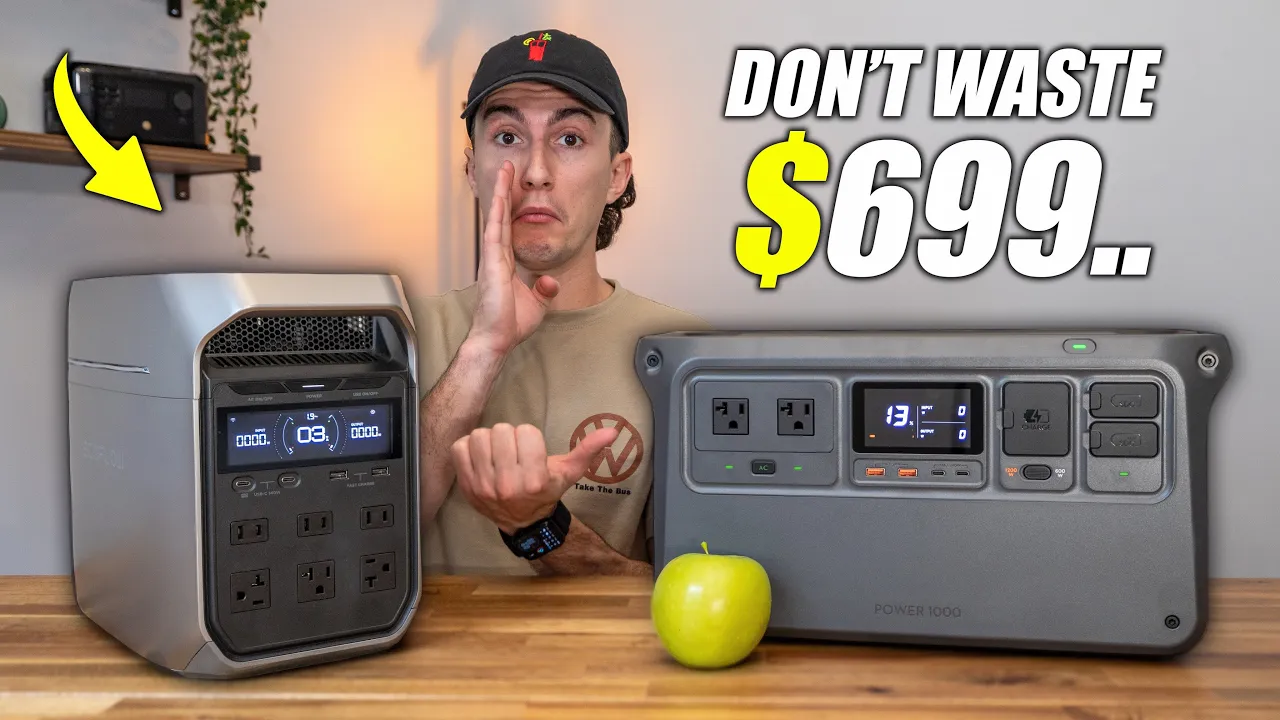
Choosing the right portable power station can be tough, especially when you want reliability, power, and convenience all in one. You might be torn between the EcoFlow Delta 3 Plus and the DJI Power 1000.
Both promise to keep your devices charged, but which one truly fits your needs? You’ll discover how these two powerhouses compare in performance, features, and value. By the end, you’ll know exactly which one is the best match for your lifestyle and adventures.
Keep reading to make a smart choice that keeps your devices powered up whenever you need them.
Design And Build
EcoFlow Delta 3 Plus is larger and heavier than the DJI Power 1000. Delta 3 Plus weighs about 30 pounds, making it less easy to carry. DJI Power 1000 is lighter, around 20 pounds, which fits better for travel or outdoor use.
Both have handles for carrying, but DJI’s design feels more compact. Delta 3 Plus is bulkier, so it takes more space in a bag or car.
Durability is strong in both models. EcoFlow uses tough plastic and metal parts. DJI also uses hard plastic but feels a bit lighter. Both can handle some bumps and drops.
| Feature | EcoFlow Delta 3 Plus | DJI Power 1000 |
|---|---|---|
| Weight | About 30 pounds | About 20 pounds |
| Size | Larger and bulkier | Compact and smaller |
| Material | Strong plastic and metal | Hard plastic |
| Portability | Less easy to carry | More travel-friendly |

Credit: versus.com
Power Capacity
The Ecoflow Delta 3 Plus has a battery size of 3.6 kWh. It uses Lithium-ion batteries known for good energy storage.
The Dji Power 1000 features a smaller battery at 1 kWh. It also uses Lithium-ion but stores less energy.
| Feature | Ecoflow Delta 3 Plus | Dji Power 1000 |
|---|---|---|
| Battery Size | 3.6 kWh | 1 kWh |
| Battery Type | Lithium-ion | Lithium-ion |
| Output Power | Up to 3600W | Up to 1000W |
The Ecoflow model can power larger devices with 3600W output. The Dji Power 1000 offers 1000W output, better for smaller needs.
Charging Options
EcoFlow Delta 3 Plus supports solar charging with up to 400W input. It charges faster with solar panels. The Dji Power 1000 also allows solar charging but at a lower rate of 200W. This means EcoFlow charges quicker under sunlight.
For AC charging, EcoFlow Delta 3 Plus can recharge fully in about 1.8 hours. The Dji Power 1000 takes longer, around 3 hours. Both devices support car charging, which is handy on the road. EcoFlow offers 12V car charging with better input power. Dji Power 1000 has car charging but slower.
| Feature | EcoFlow Delta 3 Plus | Dji Power 1000 |
|---|---|---|
| Solar Charging Power | Up to 400W | Up to 200W |
| AC Charging Time | About 1.8 hours | About 3 hours |
| Car Charging | 12V, faster input | 12V, slower input |

Credit: www.youtube.com
Port Selection
Ecoflow Delta 3 Plus offers six USB ports, including two USB-C ports. The DJI Power 1000 has four USB ports with one USB-C. More USB-C on Ecoflow means faster charging for new devices.
Both have AC outlets for regular plugs. Ecoflow provides four AC outlets, while DJI Power 1000 offers two AC outlets. More outlets on Ecoflow help connect many devices at once.
For DC ports, Ecoflow includes two car-style DC ports. DJI Power 1000 has one DC port. This helps power car gadgets or other DC devices easily.
Performance And Efficiency
Ecoflow Delta 3 Plus offers a longer run time under heavy load compared to the DJI Power 1000. It can power devices for several hours without needing a recharge. The DJI Power 1000 runs well but usually drains faster when many devices are connected.
Energy conversion efficiency is another key point. The Ecoflow model uses energy more efficiently, which means less power is lost during use. This helps it keep running longer on the same charge.
The DJI Power 1000 is good but has a slightly lower efficiency. This means it uses more energy to do the same work, leading to shorter run times.
Smart Features
The EcoFlow Delta 3 Plus and DJI Power 1000 both offer app integration for easy control. The EcoFlow app lets users monitor power use, start or stop the device remotely, and check battery status. The DJI app also provides real-time data and allows users to manage settings from their phones.
For display and controls, the EcoFlow Delta 3 Plus features a large LCD screen that shows input, output, and battery life. Its buttons are simple and easy to use. The DJI Power 1000 has a smaller screen but includes touch controls for quick changes. Both devices provide clear information to help users operate them smoothly.
Safety Features
Overload protection stops the device if too much power flows. It helps to keep both Ecoflow Delta 3 Plus and DJI Power 1000 safe from damage. This feature prevents short circuits and other electrical problems.
Temperature control keeps the battery cool. Both devices have sensors to check heat levels. If the device gets too hot, it will slow down or stop charging. This avoids overheating and keeps the battery healthy.
Price And Value
The Ecoflow Delta 3 Plus costs more than the Dji Power 1000. The price difference is about $300. The Delta 3 Plus offers a higher battery capacity, which may justify the extra cost for some users.
Both products come with a 1-year warranty. The Ecoflow brand is known for good customer support. Dji also provides helpful service but may have fewer service centers.
| Feature | Ecoflow Delta 3 Plus | Dji Power 1000 |
|---|---|---|
| Price | $1,299 | $999 |
| Warranty | 1 year | 1 year |
| Customer Support | Good, many centers | Good, fewer centers |
Best Use Cases
Ecoflow Delta 3 Plus works well for outdoor adventures. It offers a large battery and many ports for charging devices like phones and cameras. It is lightweight and easy to carry on trips. The Dji Power 1000 is also good but is heavier and better for shorter trips.
For emergency backup, both are reliable. The Ecoflow has a faster recharge time, so it gets ready quickly after use. The Dji Power 1000 is sturdy and can power small home devices during a blackout.
Professional use suits the Dji Power 1000 well. It supports heavy equipment and has stable power output. The Ecoflow Delta 3 Plus can handle many tools but is better for lighter jobs.

Credit: www.thesolarlab.com
Frequently Asked Questions
What Are The Main Differences Between Ecoflow Delta 3 Plus And Dji Power 1000?
Ecoflow Delta 3 Plus offers higher capacity and faster charging. DJI Power 1000 is more compact with advanced drone compatibility. Both are portable power stations but target different user needs and device types.
Which Power Station Lasts Longer On A Single Charge?
Ecoflow Delta 3 Plus has a larger battery capacity, providing longer runtime. DJI Power 1000 is suitable for shorter usage periods and lighter loads. Choose based on your power consumption needs.
Are Both Models Suitable For Outdoor Use?
Yes, both Ecoflow Delta 3 Plus and DJI Power 1000 are designed for outdoor portability. They feature durable construction and multiple output options for various devices, making them ideal for camping and remote work.
How Fast Can Each Power Station Recharge?
Ecoflow Delta 3 Plus supports ultra-fast recharging, fully charging in about 1 hour. DJI Power 1000 recharges slower but is efficient for its size. Charging speed depends on the power source used.
Conclusion
Both the Ecoflow Delta 3 Plus and DJI Power 1000 offer strong power solutions. The Delta 3 Plus has a larger battery and faster charging. The DJI Power 1000 is lighter and easier to carry. Choose based on your need for power or portability.
Both devices work well for outdoor use and emergencies. Think about what matters most for your activities. Both products bring reliable energy when you need it most. Simple, clear choices for different users.

Leave a Reply