

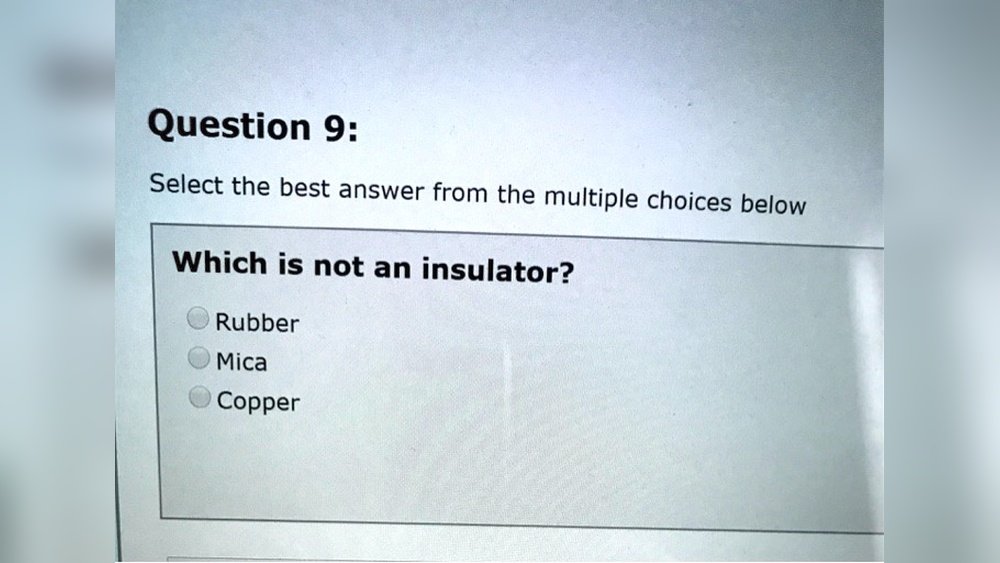
When we talk about insulators, we usually mean materials that do not allow electricity or heat to pass through easily. Insulators are important in daily life—from the wires in your home to the soles of your shoes. But sometimes, people get confused about what is and is not an insulator. Understanding the difference can help you use the right materials and avoid mistakes, especially in science or engineering projects.
What Is An Insulator?
An insulator is a material that stops or slows down the flow of electricity or heat. Common insulators include rubber, plastic, glass, and wood. These materials do not let electrical current travel through them easily. That is why electrical wires are covered in plastic or rubber—so you don’t get shocked.
Insulators are also used to keep things warm or cold. For example, the foam inside your coffee cup keeps the heat from escaping. Insulators are everywhere, and they make life safer and more comfortable.
Which Is Not An Insulator?
Now, let’s focus on the main question: Which is not an insulator? Simply put, any material that lets electricity or heat travel through it easily is not an insulator. These materials are called conductors. Some common examples are:
- Metals—like copper, aluminum, gold, and silver
- Water—especially if it contains minerals (tap water)
- Graphite—a form of carbon used in pencils
Let’s compare some materials to see which are insulators and which are not.
| Material | Insulator? | Conductivity |
|---|---|---|
| Copper | No | High |
| Plastic | Yes | Very Low |
| Wood | Yes | Low |
| Water (tap) | No | Medium |
| Glass | Yes | Very Low |
So, copper and water (with minerals) are not insulators. They are conductors.
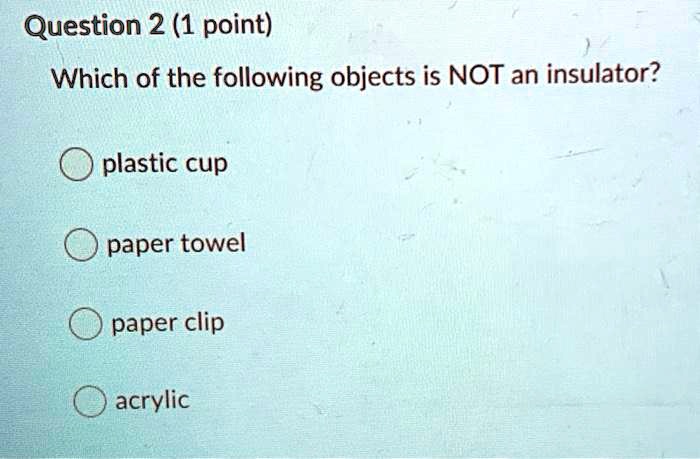
Credit: www.numerade.com
Why Are Conductors Not Insulators?
Conductors are materials that let electricity or heat pass through easily. This happens because their atoms have free electrons that move quickly. For example, in metals like copper, these free electrons make the material good for carrying electricity.
Insulators, in contrast, do not have free electrons. Their atoms hold electrons tightly, so electricity cannot move.
Here is another comparison, showing how metals and insulators work:
| Property | Insulator | Conductor |
|---|---|---|
| Electron Movement | Very little | Free and fast |
| Electrical Resistance | High | Low |
| Example | Plastic | Copper |
Examples Of Materials That Are Not Insulators
Let’s look at some common materials that are not insulators:
- Copper: Used in electrical wires, it has one of the highest conductivity rates.
- Aluminum: Also used for wiring, especially in power lines.
- Gold and Silver: Even better conductors than copper, but too expensive for most uses.
- Water: Pure water is an insulator, but tap water contains minerals and conducts electricity.
- Graphite: Found in pencils, it conducts electricity because of its special structure.
A surprising fact: graphite is a form of carbon, which is usually an insulator (like diamond), but its structure lets electrons move freely.

Credit: www.amazon.com
Why Knowing The Difference Matters
If you use a conductor instead of an insulator, you can cause accidents. For example, using metal to cover electrical wires is dangerous—someone could get shocked. In building houses, insulators keep heat inside and cold outside. Using the wrong material can make your house uncomfortable or unsafe.
Some beginners think all solids are insulators, but that is not true. Many metals are solids but conduct electricity very well.
Another common mistake: believing that all water is an insulator. But most water has minerals, which make it a conductor. Only pure distilled water is a good insulator, and even that changes quickly if any minerals are added.
Practical Tips For Identifying Insulators And Conductors
If you are unsure about a material, use these tips:
- Check the material’s type: Metals are usually conductors.
- Look for common uses: If a material is used for wires or pipes, it’s probably a conductor.
- Test with a simple circuit: If electricity flows, it’s not an insulator.
- Avoid water for safety: Tap water can conduct electricity and is unsafe near electrical devices.
Here is a table comparing common household materials:
| Household Material | Insulator? | Safe for Electrical Use? |
|---|---|---|
| Rubber | Yes | Yes |
| Metal Spoon | No | No |
| Glass Cup | Yes | Yes |
| Tap Water | No | No |
| Wooden Stick | Yes | Yes |

Credit: attaquercycling.com
Real-life Applications
Insulators and conductors are used in many ways:
- Electrical wiring: Conductors carry electricity, insulators keep you safe.
- Thermal insulation: Insulators keep your home warm or cool.
- Electronics: Circuit boards use both insulators and conductors for proper function.
Industries depend on the right choice. For example, the electrical industry uses copper wires with plastic coatings. Construction uses foam, glass wool, or wood to keep buildings insulated.
If you want to learn more about how insulators and conductors work, visit Wikipedia for deeper details.
Frequently Asked Questions
What Is The Main Difference Between An Insulator And A Conductor?
The main difference is that insulators block electricity or heat, while conductors let it flow easily.
Is Water An Insulator Or A Conductor?
Pure water is an insulator, but tap water (with minerals) is a conductor. Most water found in daily life conducts electricity.
Can Wood Be Used As An Insulator?
Yes, wood is a good insulator, but it may not be as effective as rubber or plastic, especially when wet.
Why Are Metals Not Insulators?
Metals have free electrons that move easily, making them good conductors and not insulators.
Are All Plastics Insulators?
Most plastics are insulators and are used to cover electrical wires for safety.
Understanding which materials are insulators and which are not helps you stay safe and use the right products. Remember, not all solids are insulators, and some liquids like tap water can conduct electricity. Always check before using materials near electricity.

Leave a Reply