

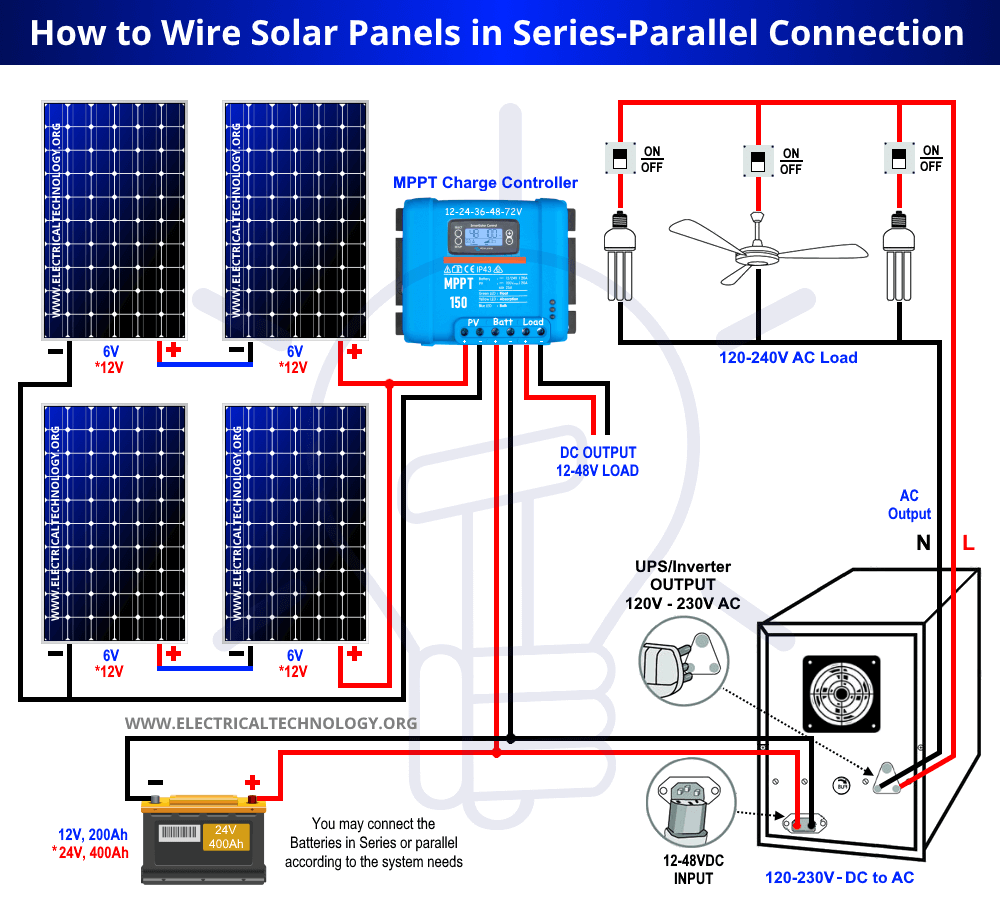
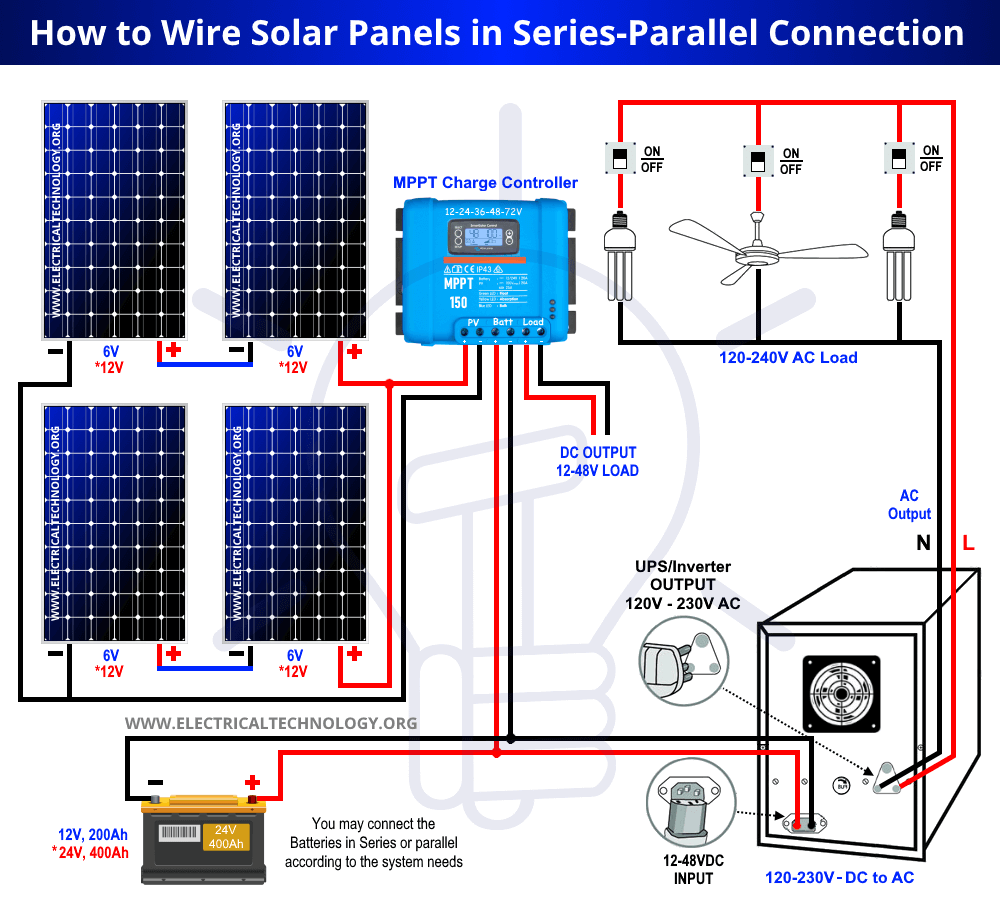
Series adds voltage, parallel adds current. Diagram choice sets system voltage and amps.
If you can read a Solar Panel Series and Parallel Connection Diagram, you can size strings, match inverters, and avoid lost watts. I install and troubleshoot arrays for a living. In this guide, I break down the Solar Panel Series and Parallel Connection Diagram with clear steps, real numbers, and field lessons you can use today.

What a Solar Panel Series and Parallel Connection Diagram Shows
A Solar Panel Series and Parallel Connection Diagram maps how panels link to form strings. It shows which panels are in series, which strings are in parallel, and where fuses and switches sit. It also notes wire sizes, polarity, and where cables land in a combiner or controller.
Why this matters is simple. The diagram sets the DC voltage and current that feed your MPPT or inverter. Done well, the Solar Panel Series and Parallel Connection Diagram keeps losses low and protects your gear.
Series Connections: How They Work and When to Use
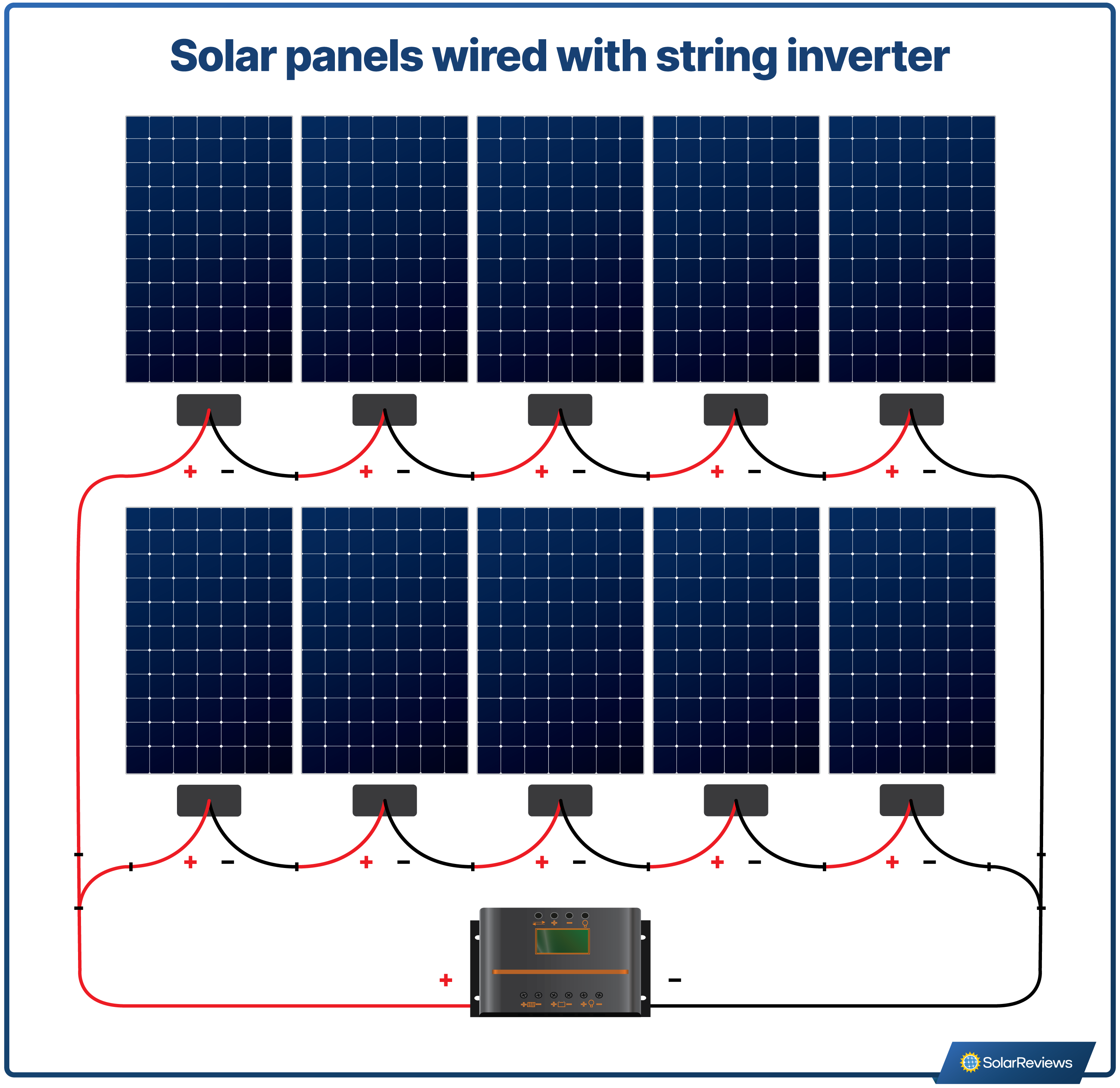
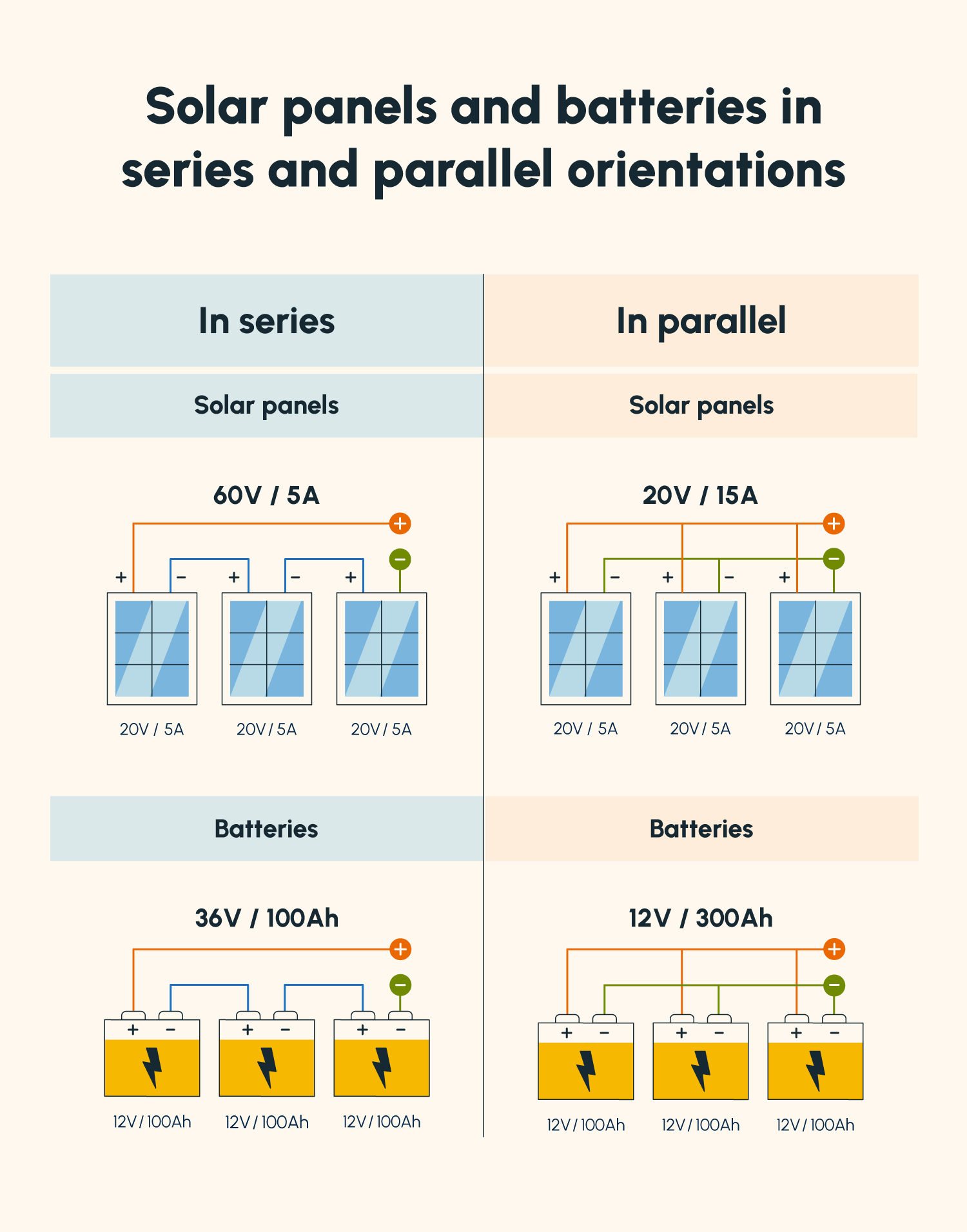
In series, you join positive to negative, like a chain. Voltage adds up. Current stays the same as one panel. Two 40 Vmp panels at 9 A each in series give about 80 V at 9 A.
Use series when you want higher DC voltage for your MPPT or string inverter. Higher voltage cuts wire loss and can allow longer runs. In a Solar Panel Series and Parallel Connection Diagram, series strings are drawn as a line of panels with one path.
Pros
- Higher voltage for better MPPT range and low cable loss.
- Fewer parallel strings, so less fusing and fewer parts.
Cons
- Shade on one panel can cut current for the whole string.
- Cold weather raises Voc. You must check max DC voltage.
Parallel Connections: How They Work and When to Use
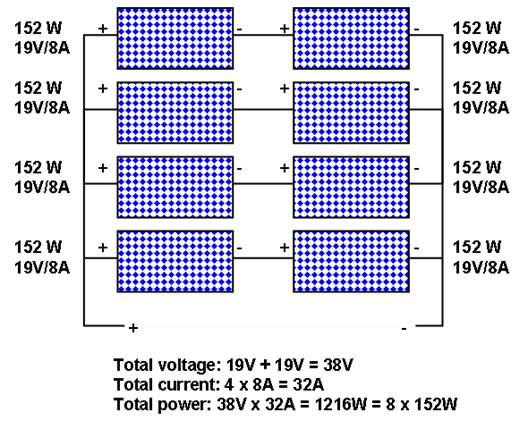
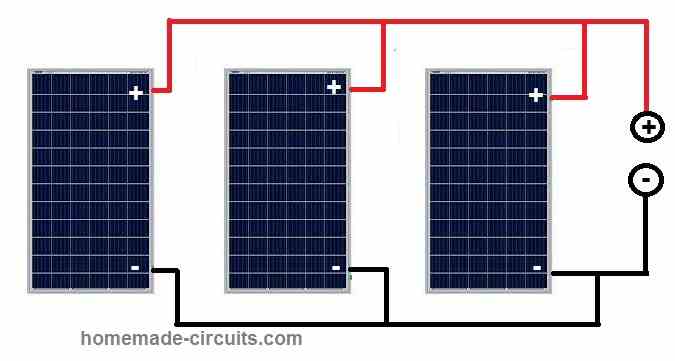
In parallel, you join positives together and negatives together. Voltage stays the same as one panel. Current adds up. Two 40 Vmp, 9 A panels in parallel give about 40 V at 18 A.
Use parallel when your controller has a low voltage limit or you need shade resilience. In a Solar Panel Series and Parallel Connection Diagram, parallel strings land on a bus or combiner.
Pros
- Shade on one string hurts less. Others keep current.
- Easy to mix small groups if voltages match.
Cons
- High current means thicker wires and more loss risk.
- Three or more strings need fuses or breakers.
Mixed Series-Parallel Strings and Smart String Sizing
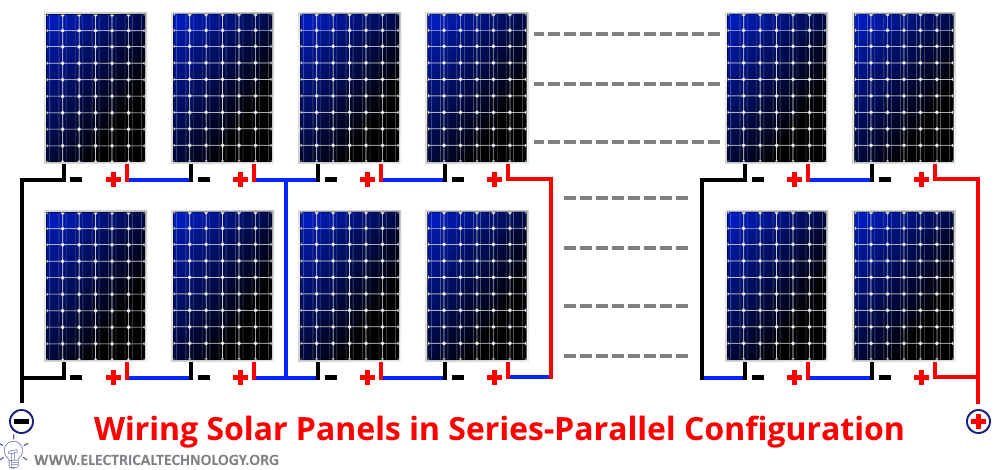
Most arrays use series-parallel. You build series strings, then parallel those strings. This keeps voltage in range while boosting current. The Solar Panel Series and Parallel Connection Diagram will show each string count, then a combiner.
Sizing steps I use on site
- Pick string length so Vmp lands in the MPPT sweet spot.
- Check worst-case Voc at the coldest site temp. Do not exceed the controller or inverter max DC.
- Keep all strings in parallel to the same length and panel model.
Tip: If panel specs vary, match by Vmp first. The Solar Panel Series and Parallel Connection Diagram should flag any mix.

Voltage, Current, and Power Math Made Simple
Know three terms in your Solar Panel Series and Parallel Connection Diagram.
- Voc. Open-circuit voltage. It rises in cold weather.
- Vmp and Imp. Voltage and current at max power.
- Isc. Short circuit current. Used for fusing.
Fast rules
- Series: V adds, A stays. Parallel: A adds, V stays.
- Power P = Vmp × Imp. Aim to match array power to the DC input power limit.
- Voltage drop. Keep DC runs under about 2 to 3 percent. Larger wire lowers loss.
A quick example
- Four 34 Vmp, 9.5 A panels in series: about 136 Vmp at 9.5 A.
- Two such strings in parallel: still about 136 Vmp, now 19 A.
- The Solar Panel Series and Parallel Connection Diagram will note this 136 V, 19 A DC feed.
Shading, Mismatch, and Bypass Diodes
Real roofs have vents, trees, and chimneys. Shade hits hard on series strings. Bypass diodes inside the panel let current go around shaded cell groups. This helps, but power still drops.
Good habits I use
- Keep strings on the same tilt and azimuth.
- Avoid mixing panels with very different Vmp in one string.
- Route cables to cut voltage drop on the longest home run.
Add notes in your Solar Panel Series and Parallel Connection Diagram for shade zones. It helps plan string layout and future checks.
Wiring, Fusing, and Safety Essentials
DC arcs are no joke. Build your Solar Panel Series and Parallel Connection Diagram with safety first. Then stick to it in the field.
Key points
- Polarity labels at every junction. Use red for positive, black for negative.
- Overcurrent protection. Three or more strings in parallel need string fuses or breakers sized per code ampacity.
- Disconnects. Put a DC isolator within reach of the controller or inverter.
- Wire size. Pick gauge for current and voltage drop. Use outdoor-rated PV wire.
Field tip: Torque matters. Loose MC4 crimp or lug is a hot spot risk. I log torque values next to lugs on the diagram notes to keep teams honest.
MPPT vs PWM and Inverter Input Rules
MPPT controllers like higher voltage. They convert extra volts into more amps. PWM holds array voltage near battery voltage, so it needs more parallel strings and thick wire.
For string inverters, the Solar Panel Series and Parallel Connection Diagram must respect these inputs
- Max DC voltage. Never exceed this at the coldest temp Voc.
- MPPT operating window. Keep Vmp inside this band.
- Max DC current. Do not oversize parallel strings beyond input limits.
I cross-check panel Voc with the coldest record temp. I add a margin. Then I confirm current with a 125 percent continuous load factor. I note both on the diagram.
Step-by-Step: How to Read and Draw a Solar Panel Series and Parallel Connection Diagram
Follow this path to draft or verify a Solar Panel Series and Parallel Connection Diagram.
- Gather panel datasheets. Note Voc, Vmp, Isc, and Imp.
- Set string length to hit the MPPT window. Check cold Voc limit.
- Choose number of parallel strings to reach target power.
- Size fuses or breakers for each string when needed.
- Pick wire sizes for strings, home runs, and battery runs if used.
- Place disconnects, combiner, and surge protection.
- Label polarity, counts, and ratings on the diagram.
- Add notes for shade, tilt, and azimuth.
Sanity check
- All strings have the same panel count and model.
- Total array power matches design goals.
- Voltage and current land within device ratings.
Real-World Examples and Lessons Learned
Ranch install, off-grid, cold winters
- Goal. Charge a 48 V battery with an MPPT.
- Design. Three panels per string. Two strings in parallel.
- Result. Vmp around 120 V, Imp around 18 A. Cold Voc stayed under the controller’s max.
Lesson learned: The first draft of the Solar Panel Series and Parallel Connection Diagram had four in series. Cold Voc would have tripped limits. We cut to three and gained uptime.
Townhouse roof with shade
- Goal. Grid-tied with a string inverter.
- Design. Shorter strings on the shaded plane. More parallel strings. Module-level power electronics on worst-hit modules.
- Result. Yearly yield jumped 11 percent.
Lesson learned: Shade notes on the Solar Panel Series and Parallel Connection Diagram save hours later. It guides both wire runs and optimizer placement.
Common Mistakes to Avoid
These errors show up often when the Solar Panel Series and Parallel Connection Diagram is missing details.
- Mismatch of Vmp within one string. This drags the whole string down.
- Ignoring cold Voc. It can void warranties or blow input caps.
- Skipping string fuses with many parallel strings.
- Long cable runs with thin wire. The drop eats power.
- Reverse polarity at the combiner. Always meter before landing.
Add a final checklist on the diagram. It makes QA simple and fast.
People Also Ask: Fast Answers
Is series or parallel better for long cable runs?
Series is better because higher voltage lowers current and drop. It keeps wire size and losses in check on long runs.
Can I mix different wattage panels in one string?
Avoid it. The string follows the weakest link. Place mixed panels on separate strings with matched Vmp if you must.
How many panels can I put in series?
As many as your cold Voc and inverter or controller limit allow. Do the math with the datasheet temp coefficient before you decide.
Frequently Asked Questions of Solar Panel Series and Parallel Connection Diagram
What is the main difference between series and parallel in solar?
Series adds voltage while current stays the same. Parallel adds current while voltage stays the same.
How do I choose series vs parallel for my system?
Match your choice to the device input. MPPT and string inverters like higher voltage from series, while PWM needs more parallel strings.
Do I need fuses in a parallel setup?
Yes, if you have three or more strings in parallel. Each string should have a fuse or breaker sized per the module’s Isc and code rules.
What happens if one panel in a series string is shaded?
The whole string current drops. Bypass diodes help, but you still lose power until shade clears.
Can I use different panel brands in one array?
You can, but keep each string with the same panel model and count. Mixing brands in one string can cause mismatch losses.
Conclusion
You now know how a Solar Panel Series and Parallel Connection Diagram sets voltage, current, and safety for your array. With the right string length, proper fusing, and clean cable routes, you unlock real gains and protect your gear. Start by mapping your own roof with the steps above, then draft your diagram and check the numbers.
Want more guides like this? Subscribe for updates, ask a question in the comments, or share your own diagram and I will help review it.

Leave a Reply